
The science behind our approach
Welcome to the science that powers our neurobehavioral programs. From epigenetics to sensory functions, discover how environmental factors shape brain development—and how we can positively influence it.
How your Brain Develops
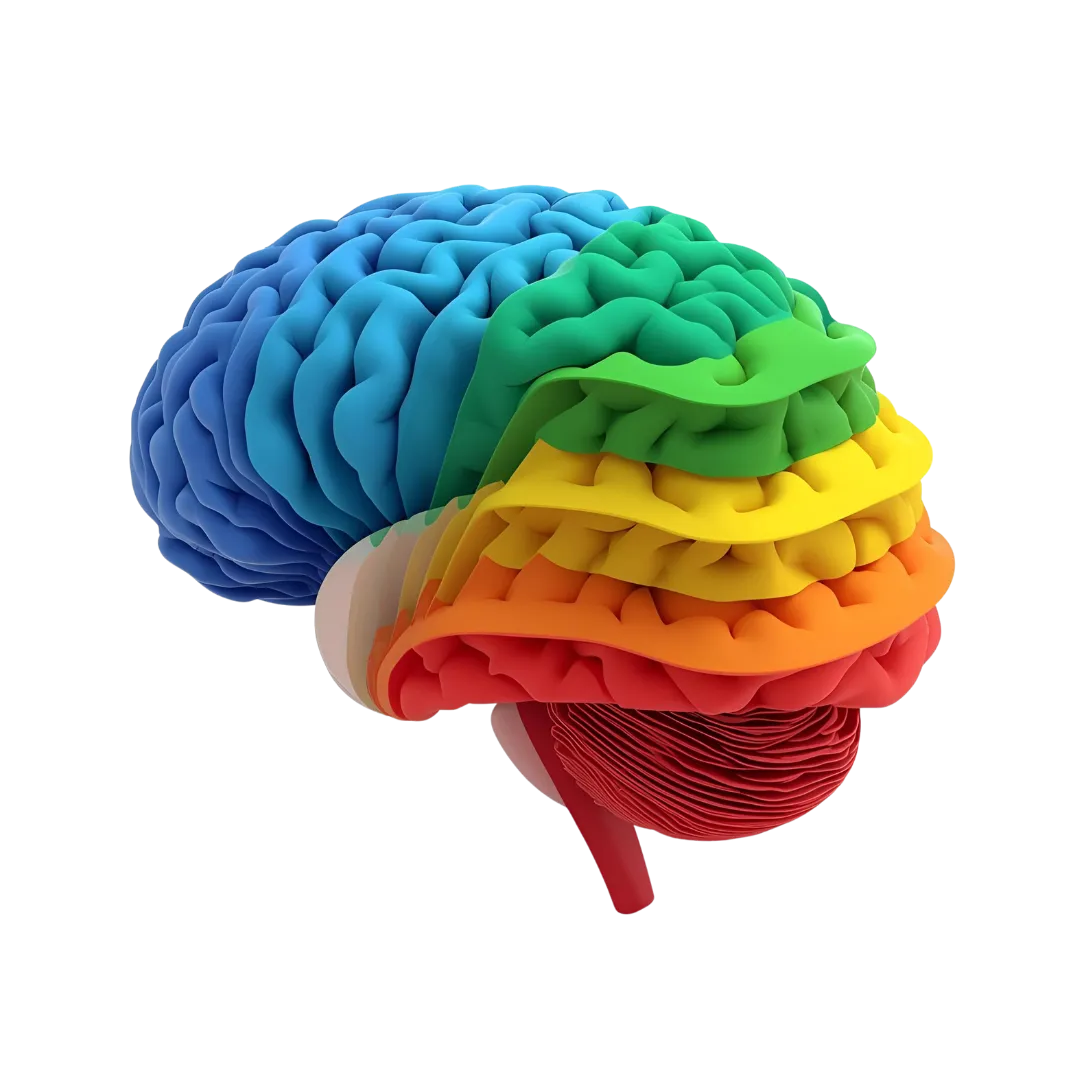
Your child's brain is a complex project that begins in the womb and will keep evolving well into their adulthood. It develops from the bottom-up and back-to-front, layering foundational structures first before adding the more sophisticated ones on top.
At the base is the brainstem, which kicks in early to manage instinctual, survival-level functions like primitive reflexes, heartbeat, and breathing, the stuff that keeps you alive without much thought.
Building on that, the sensorimotor regions develop, helping you process sensory input (like sights, sounds, and touches) and coordinate movements.
From there, cognitive layers develop, sharpening your ability to think, learn, remember, and solve problems. Finally, the executive functions in the frontal areas mature, giving you the tools for self-regulation, planning ahead, focusing attention, and making decisions amid distractions.
This whole process is dynamic: in those first few years, your brain forms more than a million new neural connections every second, creating a dense web of pathways. Then, through a natural pruning phase, it refines those connections, keeping the useful ones and trimming the rest to boost efficiency.
Here's what you need to know:
If key developmental milestones get skipped or disrupted in one of those lower layers, it ripples upward, weakening the entire structure. It's like building a house on a unstable foundation; the higher levels might still go up, but they're prone to cracks and instability, which show up later as challenges in learning, behavior, or emotional regulation, although the real structural problems are in the foundation.
Epigenetics: The Power of Your Environment

Epigenetics is like the conductor of your genetic orchestra. It doesn’t change the notes (your DNA), but it decides how loudly or softly each note is played, shaping how your genes are expressed. All environmental factors (stress during pregnancy, toxin exposure, birth challenges, etc. etc.) can influence this process. These influences leave chemical marks (think of them as molecular Post-it notes) on your DNA or its supporting proteins, which can altar how certain genes function.
One key player here is methylation, where methyl groups act like tiny barriers, attaching to DNA and potentially blocking genes from being interpereted properly. Some of these marks can stick around, passing through as many as 11 generations, subtly shaping traits and health outcomes long after the original trigger.
Your ancestors’ experiences and everything they ate, drank, smoked, and stressed out about, leaves their mark in your and your child's genetic expression. These don’t alter your DNA sequence but can affect how your RNA reads and interprets that DNA, which will impact neurodevelopment, the function of your nervous system, and even your physical health. It’s like inheriting a slightly edited instruction manual based on their life circumstances.
While negative factors like (nutrition, stress, toxins, pregnancy complications, etc.) can add these restrictive markers, positive environments work in the same way.
Through the right protocols and stimulations, you can modify or even remove these marks for your child (or yourself), leading to better brain function.
Good News:
The beauty of epigenetics is its flexibility. Targeted, positive stimulation can positively reshape gene expression. Through our program, you're actually counteracting negative markers and unlocking potential that might otherwise stay dormant!
Primitive Reflexes: The Earliest Building Blocks
Primitive reflexes are automatic, involuntary movements driven by the brainstem, present at birth to help infants survive and navigate their new world. Think of them as the brain’s pre-installed software for early development. These reflexes, like grasping a finger or startling at a loud noise, are meant to serve their purpose and then fade away, or "integrate," by around age one as higher brain regions take over.
This integration is crucial because it allows the brain to build more advanced skills, like coordinated movement, emotional regulation, and complex thinking on a stable foundation. However, when these reflexes stick around longer than they should (we call them retained reflexes) it disrupts the development of those higher brain layers, affecting behavior, learning, big-picture thinking, and executive function.
Every child we've tested (parents did the tests themselves!) with social, emotional, behavioral, or academic struggles has had at least one primitive reflex retained. This can disrupt everything from motor skills to emotional stability. It’s like having an outdated app running in the background, taking all the resources and causing glitches in the brain’s more sophisticated programs.
But there's always good news: These retained reflexes can be directly addressed and integrated with targeted exercises that help the brain "rewire" and catch up, improving function across multiple areas.
When reflexes integrate, we see improvement in emotional regulation, sensory processing, bedwetting, handwriting, oral fixations, posture, focus, and so much more.
Common Primitive Reflexes & Symptoms:
Grasp Reflex
This reflex makes a newborn tightly grip anything placed in their palm. If it lingers, it can lead to issues like writer’s cramp, where hand muscles tense up during writing, or messy handwriting due to poor fine motor control. You might notice a child gripping pencils too tightly or using an improper grip, or struggling with tasks requiring dexterity.
Rooting Reflex
This is what happens when you touch a baby's cheek. They'll turn their head, open their mouth, and look for food. This reflex is crucial to survival and it's how babies learn how to nurse. However, when it doesn't integrate properly, it causes issues with articulation and almost always leads to issues with "mouthing" (putting fingernails, pens, pencils, toys, etc. in their mouth.)
Moro Reflex
Often called the "startle reflex," it causes babies to fling out their arms in response to sudden noises or movements. If retained, it causes to noise sensitivity, anxiety, and emotional reactivity (the 0-100 in a split second over "nothing" type).
Spinal Galant Reflex
Triggered by touch along the lower back, this reflex helps with movement and delivery during birth. If it doesn’t integrate, it can cause tactile sensitivity (issues with jeans, tags, socks, shoes, etc.), difficulty sitting still, and bedwetting.
Asymmetrical & Symmetrical Tonic Neck Reflexes
Essentially an inability to separate the movement of the head from the movement of the torso, an unintegrated ATNR and/or STNR leads to issues with focus, expressive language, and posture.
Tonic Labyrinthine Reflex
TLR for short, this reflex inhibits the ability for babies to separate the movement of their head from the forward and backward movement of their bodies. The biggest signs to look out for regarding a retained TLR are: liking to spin, climb, jump, and crash (excessively) or, on the opposite side of this weakness, things like motion sickness or excessive fear of things like heights or going too fast.
Sensory & Motor Functions:
Building the Coordination Hub
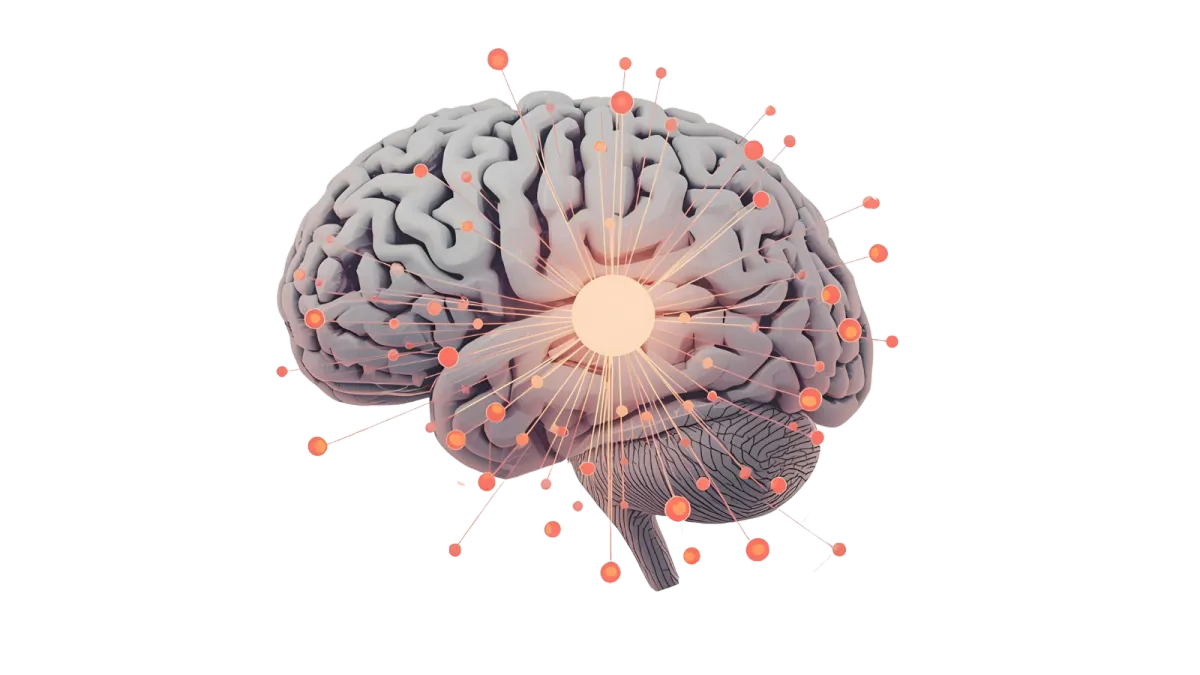
After the brainstem lays the groundwork, the brain’s sensory and motor functions step up to help us interact with the world. These systems, which develop next in the brain’s layered construction, process sensory input—like sights, sounds, and touch—and translate it into purposeful movements. However, when primitive reflexes from the brainstem fail to integrate (as discussed earlier), they can throw these systems off balance, creating a cascade of challenges that affect learning, behavior, and even basic bodily functions. Think of it like a glitchy relay race: if the baton isn’t passed smoothly from the brainstem to the sensory and motor regions, the whole team struggles to keep up.
Sensory and motor development are deeply interconnected, relying on both hemispheres of the brain. The left hemisphere, which handles sequential and analytical tasks, is critical for skills like reading and writing. If it’s underdeveloped or disrupted by retained reflexes, you might see issues like dyslexia, where decoding words becomes a struggle. The right hemisphere, more focused on spatial and emotional processing, supports behavior regulation and social cues. Weaknesses here, often linked to retained reflexes, can show up as impulsivity or inattention, common in conditions like ADHD. These aren’t just labels—they reflect how the brain’s wiring can get tangled when early developmental steps are missed.
Key Functions:
Fine Motor Skills:
These involve the small muscles in the hands and fingers, powering tasks like handwriting, tying shoes, or using utensils. When fine motor skills lag—sometimes due to retained reflexes like the Grasp Reflex—you might notice a child struggling to write legibly, gripping pencils too hard, or fumbling with buttons and zippers. These challenges can frustrate academic progress and self-confidence.
Gross Motor Skills:
These rely on larger muscle groups for activities like running, jumping, or maintaining balance. Weak gross motor skills, often tied to retained reflexes like the Spinal Galant, can make a child appear clumsy, struggle with sports, or have trouble staying upright during tasks like sitting at a desk. Good gross motor skills are essential for physical confidence and classroom participation.
Proprioception:
This is your brain’s GPS for body awareness, telling you where your limbs are without looking and helping you gauge how much force to use (like not crushing a paper cup). Poor proprioception, sometimes linked to retained reflexes, can lead to fidgeting, bumping into things, or difficulty reading facial expressions, as the brain struggles to process spatial and social cues. This can make social interactions or focused tasks feel overwhelming.
Beyond movement, retained reflexes can also disrupt other systems, like digestion (causing issues like slow gut motility) or sleep (making it hard to settle or stay asleep). These effects stem from the brainstem’s role in regulating both motor and autonomic functions, meaning a glitch in one area can ripple into others.
The Good News:
The brain’s plasticity is so important here. Targeted and specific stimulations can improve these functions and strengthen sensory and motor pathways. Our program will teach you how to untangle the brain’s wiring, leading to better focus, smoother movements, and even improved sleep or digestion.
American Occupational Therapy Association Research
National Institute of Child Health and Human Development Research
Visual & Auditory Processing: Making Sense of Sights and Sounds
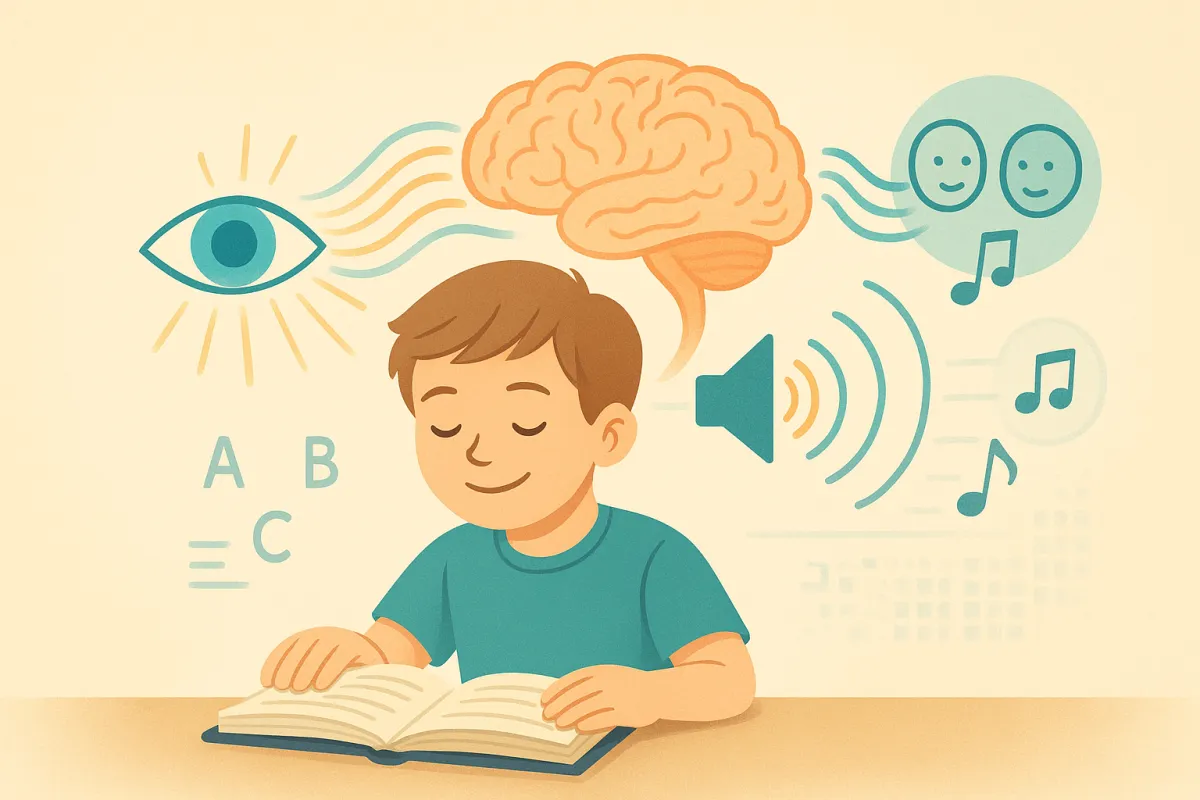
Your eyes and ears are like extensions of your brain, capturing light and sound waves and transforming them into meaningful information, like reading a book or picking out a friend’s voice in a busy room. These visual and auditory processing systems, which build on the brainstem and sensory-motor foundations, are critical for learning, focus, and social interaction. When these systems are immature or disrupted, often due to retained primitive reflexes, it can lead to challenges in reading, maintaining attention, or navigating busy environments. Kind of like trying to watch a movie with a blurry screen or crackling audio: the brain gets the signal, but can't make sense of it.
These processing systems rely on both brain hemispheres working in sync. The left hemisphere, which excels at detail-oriented tasks, supports skills like decoding words or following sequential sounds, crucial for reading and listening comprehension. If it’s underdeveloped or thrown off by retained reflexes, issues like dyslexia or difficulty following spoken instructions can emerge. The right hemisphere, geared toward big-picture and spatial processing, helps with interpreting visual patterns (like judging distances) or the emotional tone of speech. Immaturity here can lead to problems like misreading social cues or trouble focusing in visually or auditorily busy settings, and is one of the main causes of distractibility and attention difficulties for kids with ADHD.
Functions:
Visual Tracking:
This is the ability to smoothly follow moving objects with your eyes, like tracking words across a page while reading or watching a ball to catch it. Immature visual tracking can cause kids to lose their place while reading, have a hard time maintaining eye contact, struggle with copying from a whiteboard, or appear uncoordinated in sports.
Auditory Processing:
This is our ability to process auditory inputs, such as distinguishing speech from background noise or recognizing the rhythm of language. Poor auditory processing might show up as trouble following conversations in a crowded room, mishearing similar-sounding words (like “big” vs. “pig”), or feeling overwhelmed by loud environments. This is both frustrating and irritating for kids when they're in environments like a busy classroom.
Vestibulo-Ocular Reflex (VOR):
This reflex allows your eyes to stay fixed on a target even when your head moves. It's the reason you can read a sign even though you're walking. Underdeveloped VOR can lead to clumsiness, dizziness, motion sickness, or difficulty coordinating head and eye movements.
These area of functional weaknesses create downstream challenges in areas like social skills, academic performance, focus, and even behavior.
The Good News:
Neuroplasticity offers a powerful way forward. Targeted sensory stimulation can mature these processing systems, meaning that the correlated social, emotional, behavioral, academic, or focus struggles can also improve. With our program and support team, you'll learn how to unlock significant improvements, helping your child thrive in school, play, and social interactions.
The Hemispheric Brain: Symmetry Shapes Development
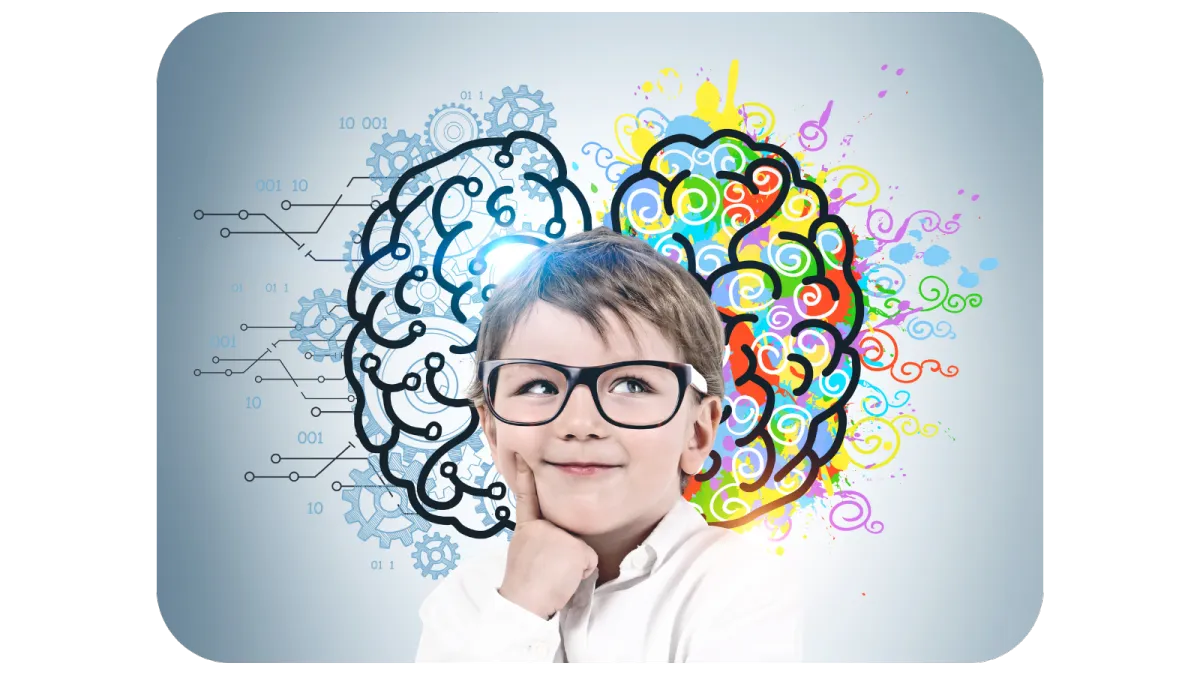
As the brain builds its complex layers from primitive reflexes in the brainstem to sensory-motor skills, cognition, and executive functions, each step relies on the smooth integration of earlier ones. When primitive reflexes fail to integrate, it throws a wrench into this process, stalling development and creating an imbalance between the brain’s two hemispheres.
This imbalance, known as hemisphericity, means one side of the brain isn’t pulling its weight as well as the other, leading to specific challenges in learning, behavior, or emotional regulation.
Each hemisphere has its own strengths. The left hemisphere is your detail-oriented, analytical side, excelling at tasks like breaking down words for reading or crunching numbers for math. The right hemisphere is the big-picture thinker, handling spatial awareness, emotional cues, and social interactions. When retained reflexes disrupt development, they can disproportionately weaken one hemisphere, creating distinct patterns of struggle depending on which side is impacted. These imbalances often lead to diagnoses, but labels like dyslexia or ADHD don’t always tell the full story. Sometimes, issues like poor visual processing can mimic these conditions, which is why we always begin with a through assessment to determine hemispheric weakness and build your program based on those results.
Key Impacts of Hemispheric Weaknesses:
Left Hemisphere Weaknesses:
-Dyslexia
-Fine motor delays
-Gets sick often
-Academic difficulties
-Language processing delays
-Depression
Right Hemisphere Weaknesses:
-Behavioral challenges
-Emotional dysregulation (anger)
-Social struggles
-Immaturity
-Focus difficulty
-Impulsivity
Watch Out for This Mistake:
Diagnoses like dyslexia or ADHD can be helpful in some ways, but they’re not always the full picture. For instance, what looks like dyslexia might actually stem from visual processing issues, like trouble tracking words across a page, which can be mistaken for a reading disorder. Similarly, inattention might be less about ADHD and more about sensory overload from an unintegrated reflex. Comprehensive testing (looking at things like reflex integration, sensory processing, and hemispheric function) helps us pinpoint the real root of your individual child's struggles.
The Good News:
You guessed it: neuroplasticity! We can use targeted sensory and motor interventions to not only integrate reflexes and strengthen specific sensory systems, but also to increase function in your child's weaker hemisphere and create harmony and synchronization across both sides, decreasing their struggles.
Temporal Summation and Coherence: The Glue that Holds it all Together
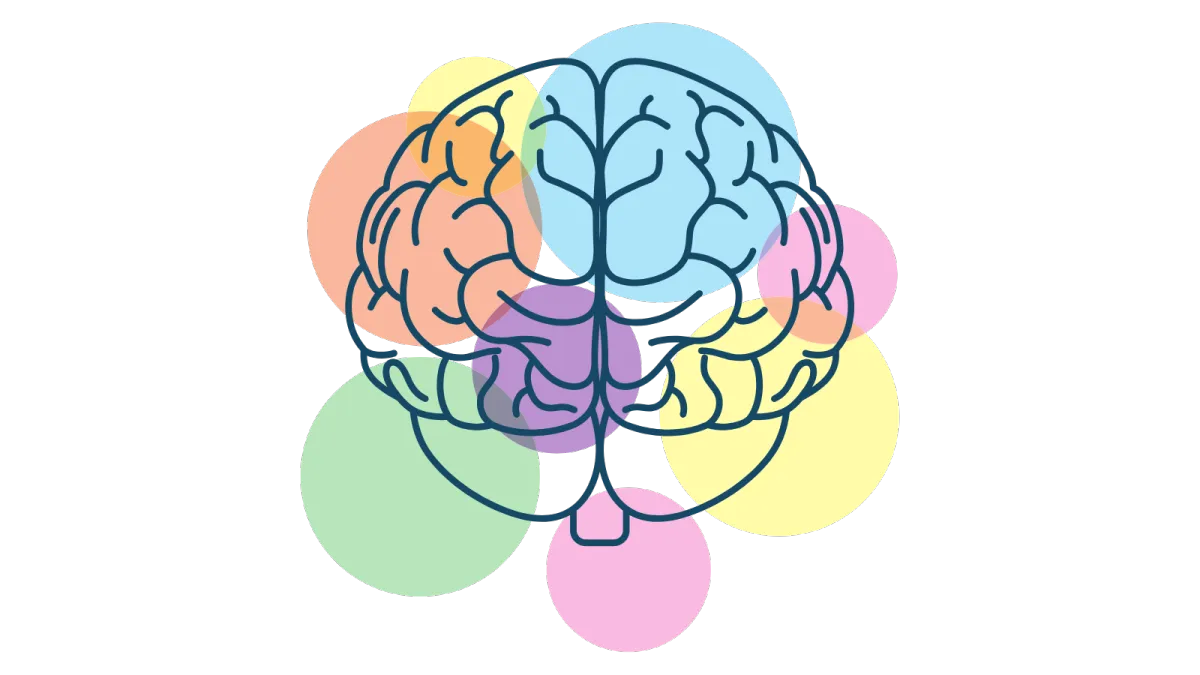
Temporal summation and coherence sound complex, but they’re really about getting different parts of the brain to "talk" to each other effectively. Imagine your brain as a bustling network of cities, each with its own role but needing to coordinate to keep the whole system running smoothly.
Temporal summation happens when we stimulate multiple brain regions at the same time, forcing them to sync up and communicate. This simultaneous activation strengthens the connections between these regions, not just within one hemisphere but also across both hemispheres, creating a more unified and efficient brain network.
When we repeat this process with increasing complexity by like adding more challenging tasks or sensory inputs, it’s like upgrading their brain’s communication highways, helping it mature and unlock their potential, or like training an orchestra to play in perfect harmony: each section learns to listen and respond to the others, creating a richer, more cohesive performance.
Temporal coherence is what happens when you graduate our program: all areas of your child's brain are functioning optimally, and are communicating with each other at an age-appropriate speed.
This process is critical because the brain doesn’t operate in isolation. For example, when you read, your visual system (processing letters), auditory system (sounding out words), and motor system (tracking the page) all need to work together with perfect synchronization and coherence.
Why It Matters:
When brain regions communicate effectively, it will transform how your child learns and interacts. For example, strengthening connections between the left hemisphere’s language centers and the right hemisphere’s spatial awareness can help a child with dyslexia read more fluently or make a child with ADHD better at staying on task in a busy classroom. These improvements don’t just address symptoms—they build a stronger, more integrated brain, setting them up for long-term success that lasts.
Understanding how your child’s brain develops, layer by layer, from reflexes to complex skills, offers more than just insight; it’s the key to unlocking their full potential.
Whether it’s tackling learning challenges, refining sensory skills, or boosting focus and confidence, the science shows us that change is possible with the right support.
Ready to take the next step?
Apply for a free consultation with us to explore a personalized plan tailored to your child’s needs.
We’re here to guide you every step of the way. Let's unlock your child's full potential together!
More Research

© 2026 | Privacy Policy
(314) 632-6286

